On this page
Retatrutide 10 mg, 30 mg or a preloaded autoinjector?
Compare two lyophilized powder vials and a preloaded liquid pen. The cards show the total amount, format and available documents. These are laboratory research products; their specifications describe the material supplied.
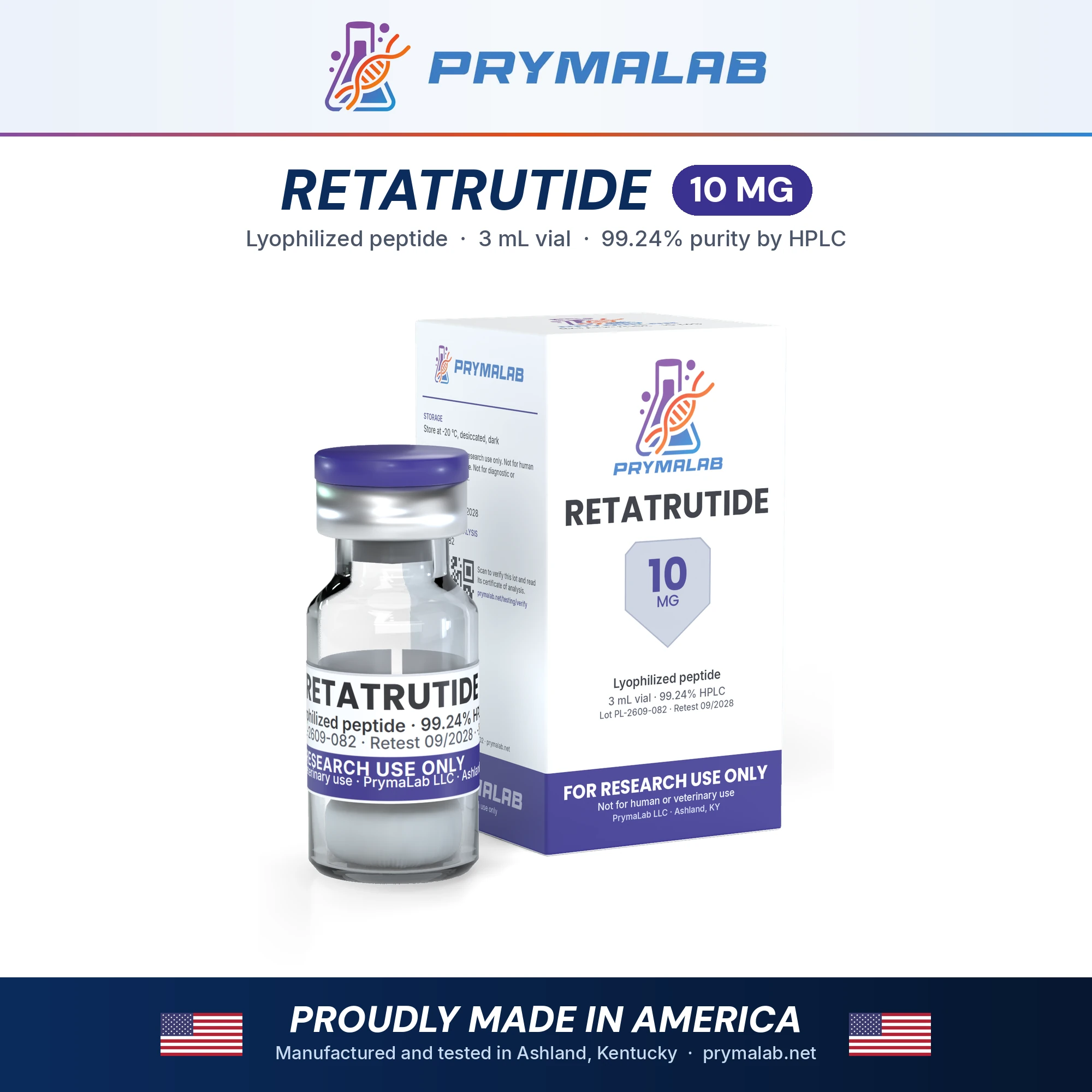
Retatrutide 10 mg
A 10 mg powder format with an original, lot-specific certificate to review.
- Total peptide
- 10 mg
- Format
- Powder vial
- Vial lot
- PL-2609-082
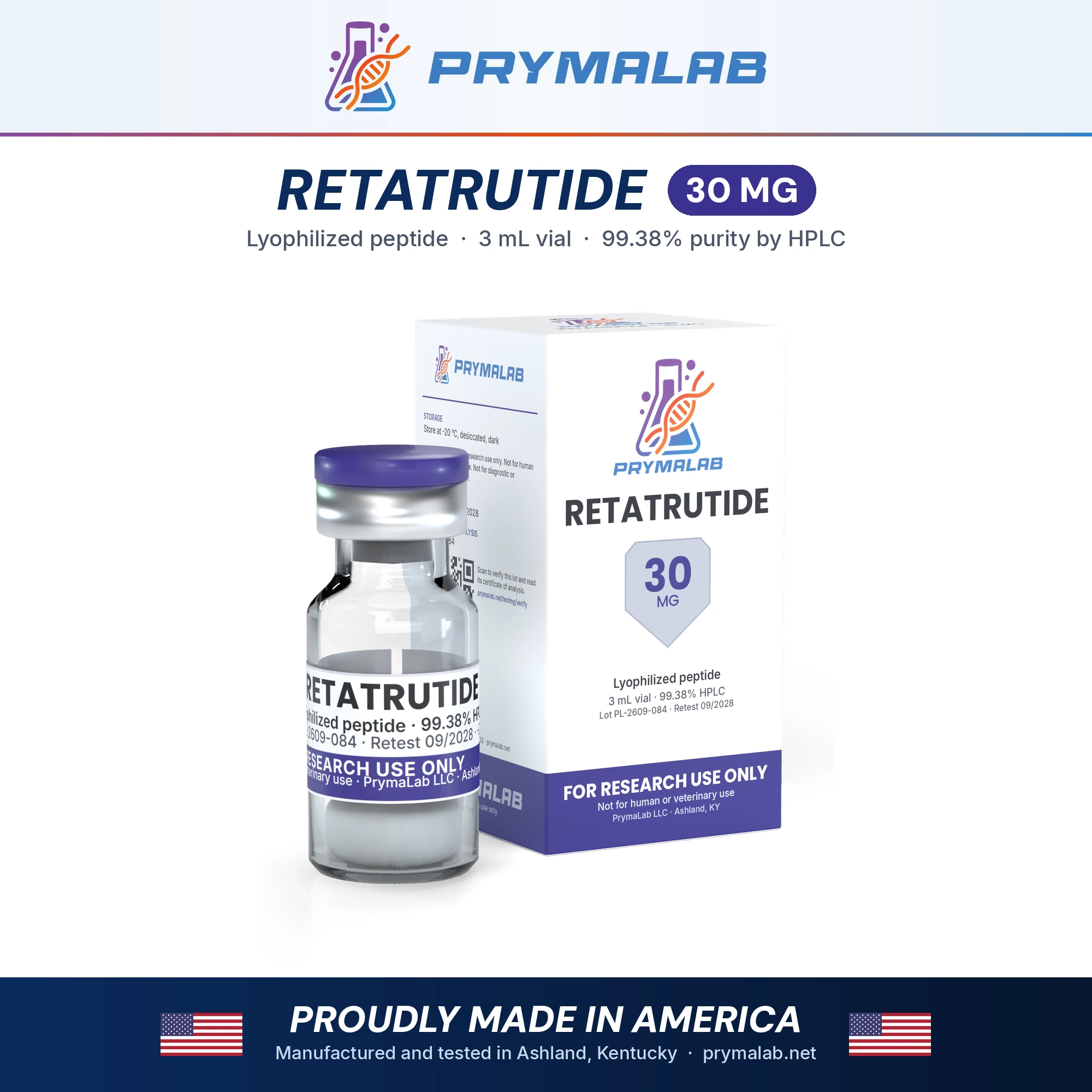
Retatrutide 30 mg
Three times the total peptide of the 10 mg vial, with its own original report.
- Total peptide
- 30 mg
- Format
- Powder vial
- Vial lot
- PL-2609-084
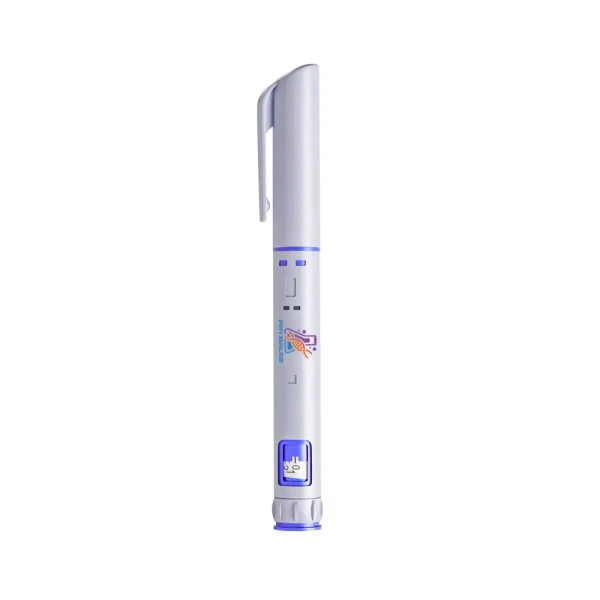
Retatrutide 15 mg pen
A preloaded liquid format containing 15 mg in 3 mL, equivalent to 5 mg/mL.
- Total peptide
- 15 mg
- Liquid volume
- 3 mL
- Concentration
- 5 mg/mL
Online purchasing is not available yet. The product details and original documents remain available to review.
What does each retatrutide product contain?
| Product | Total peptide | Supplied form | Liquid concentration |
|---|---|---|---|
| 10 mg vial | 10 mg1 | Lyophilized powder | Depends on the final prepared volume |
| 30 mg vial | 30 mg2 | Lyophilized powder | Depends on the final prepared volume |
| 15 mg autoinjector | 15 mg in 3 mL4 | Preloaded solution | 5 mg/mL |
Read the number together with its unit. Milligrams describe peptide amount; millilitres describe liquid volume. A “3 mL pen” contains a volume of solution, not 3 mg of peptide. The pen's 15 mg total is separate from its 5 mg/mL concentration.
How do you choose between the two vial sizes?
The 30 mg vial contains three times the peptide amount of the 10 mg vial. It is a quantity difference. Vial size alone does not determine the concentration of a prepared solution or the amount used in a laboratory method.
Compare the amount your validated method requires, the number of containers you want to handle, and the documented use period after preparation. A smaller container can be practical when less material is required; a larger one changes the total amount available in a single container.
One 30 mg vial or three 10 mg vials?
Both represent a total quantity of 30 mg. They differ in container count and lot documentation. Each container should be matched to its own label and report; equal total milligrams do not make packaging or preparation records interchangeable.
Compare these quantities alongside cost per milligram below. The larger vial is not automatically better value just because its total amount is higher.
Is a 30 mg vial stronger than a 10 mg vial?
It contains more peptide. A liquid's concentration also depends on its final volume. Assuming complete dissolution, 10 mg in a final 2 mL gives 5 mg/mL, while 30 mg in the same final volume gives 15 mg/mL.
Those are arithmetic examples, not preparation recipes. The laboratory method must support the selected solvent, concentration and final volume. A calculation cannot establish whether the material will fully dissolve under those conditions.
The preloaded pen has a stated 15 mg in 3 mL, so its concentration is already defined. This does not establish an amount per click: that depends on the specific device's documented delivery volume.
For the complete explanation, final-volume tables and working calculator, open retatrutide concentration and reconstitution. That guide also explains how clinical study doses differ from product quantities.
Which COA matches each retatrutide vial?
The two vial formats have separate original, two-page certificates of analysis. Both are the supplier's in-house lot reports. Check the compound, format and lot together when opening a document.
| Format | Lot | Certificate | Reported RP-HPLC area purity |
|---|---|---|---|
| 10 mg vial | PL-2609-082 | PL-26-00082 ↗ | 99.24%1 |
| 30 mg vial | PL-2609-084 | PL-26-00084 ↗ | 99.38%2 |
RP-HPLC area purity describes the proportion of the integrated chromatogram assigned to the main peak. Keep it separate from total vial content: a percentage and a milligram amount answer different questions.
Does either vial COA cover the finished pen?
The documents listed here identify powder-vial lots. They should not be presented as finished-pen test reports. The pen's safety data sheet provides formulation and handling information; it serves a different purpose from a lot-specific certificate.
For a closer explanation of the documents, visit Quality + COA. Keep the full report, including its identifiers and scope, rather than relying on a cropped purity number.
How do you compare retatrutide prices per milligram?
Use the same calculation for every format:
Cost per mg = product price ÷ total peptide amount
| Format | Calculation | Amount used in the calculation |
|---|---|---|
| 10 mg vial | Vial price ÷ 10 | 10 mg |
| 30 mg vial | Vial price ÷ 30 | 30 mg |
| 15 mg pen | Pen price ÷ 15 | 15 mg, not its 3 mL volume |
The break-even comparison is exact: a 30 mg vial has the same price per milligram as a 10 mg vial when its price is three times as high. Below that multiple, its price per milligram is lower; above it, higher.
For a 15 mg pen, the matching price is 1.5 times the price of a 10 mg vial, or half the price of a 30 mg vial. These are arithmetic relationships, not quoted prices or claims that the formats are equivalent.
Cost per milligram is one comparison. Also consider the supplied form, device, documentation and laboratory preparation requirements. If you compare total order costs, include the same categories of charges on both sides and divide by the total milligrams in each order.
No current selling prices or delivery charges are quoted on this page.
What changes between a powder vial and a preloaded pen?
The vial starts as powder; the pen starts as solution. A powder preparation requires the laboratory's method to specify the solvent, final volume and handling conditions. A preloaded format already has a stated liquid volume and concentration.
The powder safety data sheet specifies −20 °C for the sealed vial, kept dry and protected from light. The pen sheet specifies 2–8 °C, protected from light, without freezing.34
For prepared powder solutions, the applicable use period needs to come from the laboratory method and supporting stability information. A powder retest date is not automatically the expiry date of a newly mixed liquid.
Open the original powder SDS ↗ or the original pen SDS ↗ for the full handling documents. The laboratory preparation guide explains how these details fit into a documented method.
Can you buy retatrutide as an approved weight-loss medicine?
As checked on 3 November 2026, retatrutide remains investigational. Lilly states that it is not on the market as an approved medicine and that its future launch depends on clinical development and regulatory approval.5
In the United States, FDA states that retatrutide is not a component of an FDA-approved drug and cannot be used in compounding under federal law.6 The research formats shown here should not be confused with an approved prescription product.
Online purchasing on this website is not available yet. The listings do not confirm stock, dispatch dates or a delivery service. For medical weight management, a licensed clinician can discuss the approved options available for your circumstances.
What else should you know before comparing retatrutide products?
Is GLP-3 the same name as retatrutide?
“GLP-3” is an informal label used for triple agonists such as retatrutide. Retatrutide acts at GLP-1, GIP and glucagon receptors; GLP-3 is not a separate receptor classification.5 Use the compound name and amount when matching a product to its documents.
Does the 15 mg pen contain more peptide than a 30 mg vial?
No. It has half the peptide amount. Two 15 mg pens add up to 30 mg, but they remain two preloaded devices rather than one powder vial. Total milligrams do not describe all the differences between those formats.
Is the preloaded pen ready without mixing?
It is supplied as a liquid, so it does not have a powder-reconstitution step. That describes the supplied format, not an instruction to administer it. Read the device and formulation documents for their specific handling requirements.
Does the higher purity percentage make one vial the better choice?
Evaluate the matching report and its test scope, along with the quantity and format needed for your method. A small difference in HPLC area percentage alone does not settle a value comparison or establish a different clinical effect.
Where can you ask about a report or missing specification?
Send document questions to [email protected]. Include the product format, lot number and document identifier so the question can be matched to the correct record.
Sources and original records
Original research, official prescribing information and named product documents. Each numerical result refers to the stated population, timeframe and analysis.
- 01Original Retatrutide 10 mg vial COA · PL-26-00082 ↗
Supplier in-house certificate for lot PL-2609-082. Label claim 10 mg per vial and reported RP-HPLC area purity; complete original PDF.
- 02Original Retatrutide 30 mg vial COA · PL-26-00084 ↗
Supplier in-house certificate for lot PL-2609-084. Label claim 30 mg per vial and reported RP-HPLC area purity; complete original PDF.
- 03Original powder-vial safety data sheet · PL-SDS-140 ↗
Supplier primary document · revision 1.0, 3 October 2026. Powder format and specified laboratory storage.
- 04Original preloaded-pen safety data sheet · PL-SDS-141 ↗
Supplier primary document · revision 1.0, 3 October 2026. Preloaded 15 mg / 3 mL solution and specified storage.
- 05Lilly: retatrutide terminology and development status ↗
Official developer information, checked 3 November 2026. Informal GLP-3 terminology and current investigational status.
- 06FDA: concerns with unapproved GLP-1 products ↗
FDA information, checked 3 November 2026. Retatrutide approval and US compounding status.