On this page
What retatrutide doses were studied for weight loss?
TRIUMPH-1 studied target doses of 4 mg, 9 mg and 12 mg once weekly in adults with obesity without diabetes. The treatment period lasted 80 weeks. These numbers identify the assigned study groups; they are not three starting-dose options.1
Three numbers to keep separate
- Weekly study dose: the amount assigned at a particular stage of a clinical trial.
- Vial amount: the total labelled milligrams inside a powder vial.
- Concentration: the milligrams in each millilitre of a prepared liquid.
A 30 mg vial therefore does not mean a 30 mg weekly dose. Likewise, a 5 mg/mL liquid does not identify a person's treatment amount. Start with the question the number answers before comparing two labels.
Retatrutide remains investigational as of 2 November 2026. The clinical schedules below describe supervised studies. The product listings and concentration tools concern laboratory materials, which are not approved weight-loss prescriptions.12
Which retatrutide formats can you compare?
Review the 10 mg vial, 30 mg vial and 15 mg / 3 mL pen together. Each format has a different total amount; the powder vials also need a laboratory preparation method. Compare the format details and open the original vial certificates below.
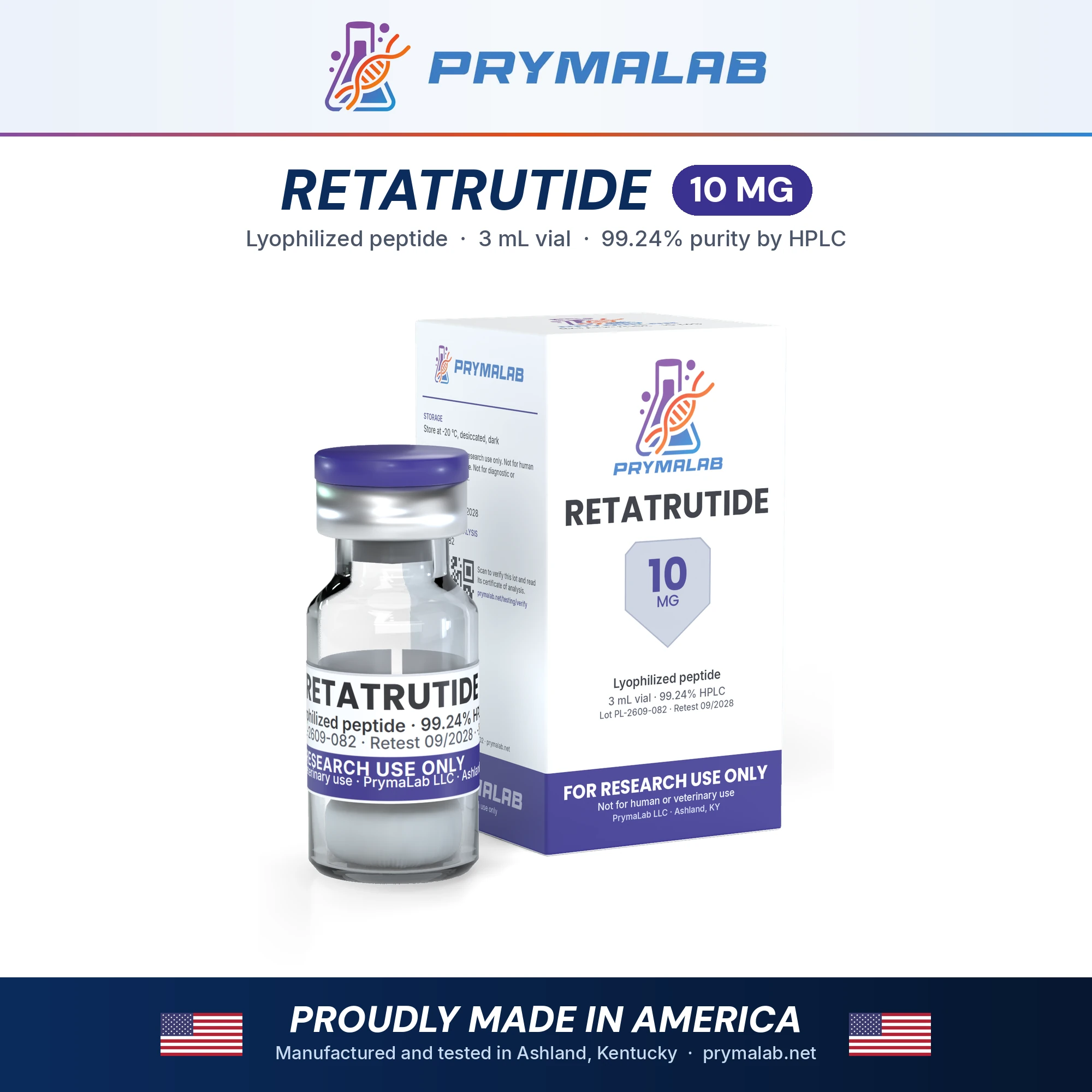
Retatrutide 10 mg
A 10 mg powder format with an original, lot-specific certificate to review.
- Total peptide
- 10 mg
- Format
- Powder vial
- Vial lot
- PL-2609-082
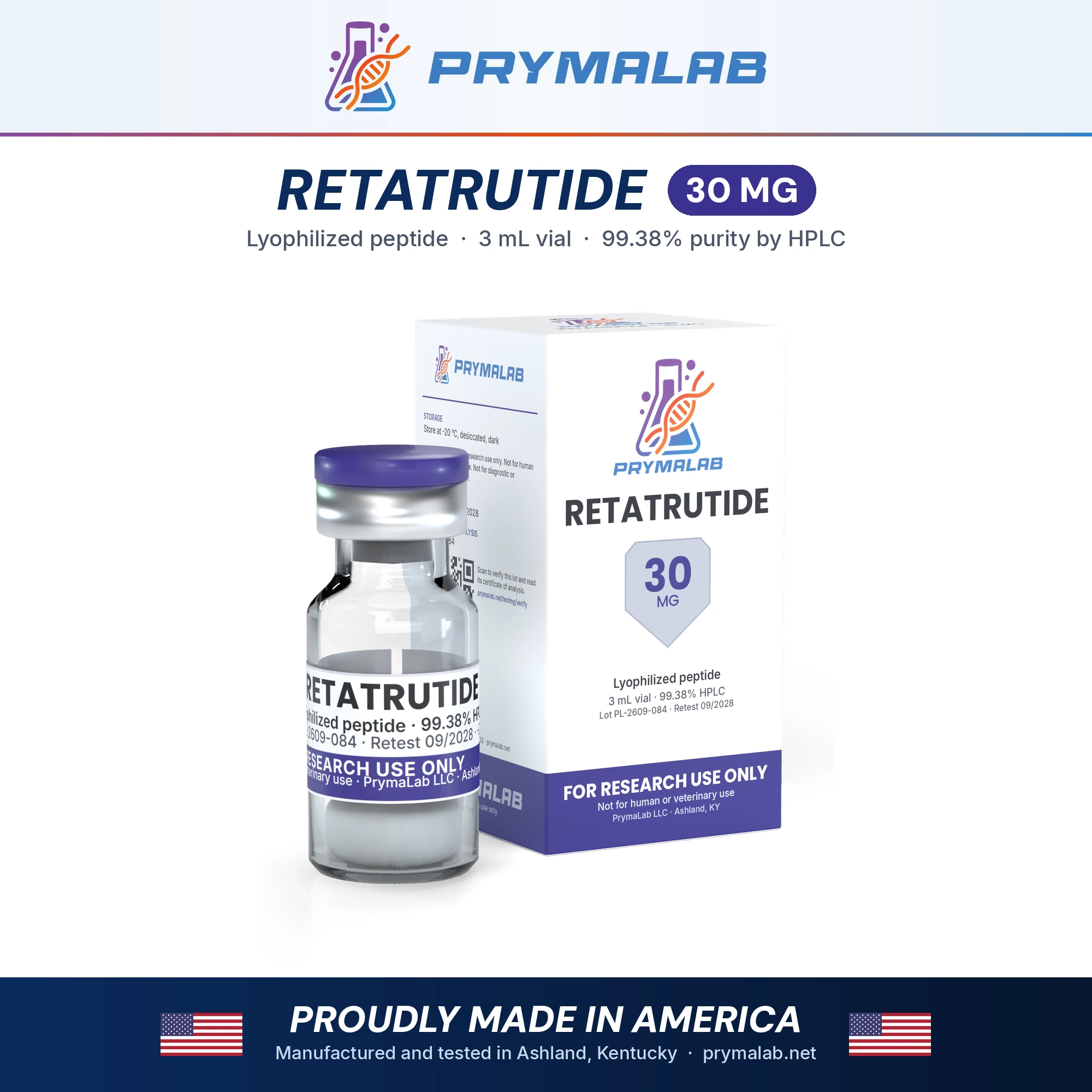
Retatrutide 30 mg
Three times the total peptide of the 10 mg vial, with its own original report.
- Total peptide
- 30 mg
- Format
- Powder vial
- Vial lot
- PL-2609-084
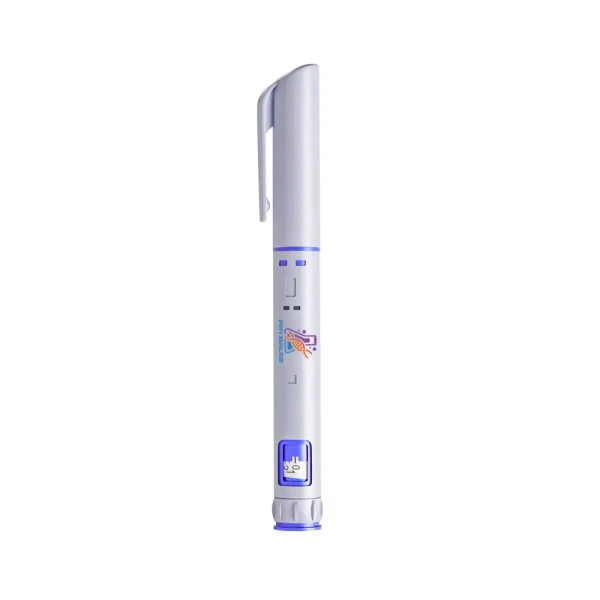
Retatrutide 15 mg pen
A preloaded liquid format containing 15 mg in 3 mL, equivalent to 5 mg/mL.
- Total peptide
- 15 mg
- Liquid volume
- 3 mL
- Concentration
- 5 mg/mL
What starting dose and four-week increases did TRIUMPH-1 use?
The sponsor describes a 2 mg weekly starting stage, followed by increases every four weeks until the assigned target. The table translates that sequence into trial weeks. Every number is an amount assigned once weekly.2
| Trial weeks | 4 mg target group | 9 mg target group | 12 mg target group |
|---|---|---|---|
| 1–4 | 2 mg | 2 mg | 2 mg |
| 5–8 | 4 mg | 4 mg | 4 mg |
| 9–12 | 4 mg | 6 mg | 6 mg |
| 13–16 | 4 mg | 9 mg | 9 mg |
| 17 onward | 4 mg | 9 mg | 12 mg |
The 12 mg pathway is 2 → 4 → 6 → 9 → 12 mg. Lower-target groups stopped escalating earlier. Week ranges are derived from the sponsor's four-week intervals; participant-specific protocol changes are not represented.2
Is retatrutide taken daily or weekly?
Once weekly is the administration frequency described in the major obesity trials. A table entry such as “4 mg weekly” means one scheduled administration during that week, not 4 mg on each day.1
Dividing a weekly amount by seven produces an arithmetic daily average. It does not create a daily protocol, establish equivalent exposure or justify splitting the scheduled administration.
Does four weeks mean one calendar month?
Four weeks is 28 days. Four scheduled administrations of 4 mg total 16 mg; months can contain a different number of weekly administration dates. Count actual scheduled dates when interpreting a study record rather than treating every calendar month as four doses.
The tables also do not specify a universal morning, evening or meal-based routine. Trial participants received timing and missed-dose instructions from their study team. A clinical target number alone cannot supply those instructions.
How long is a retatrutide cycle?
The earlier phase 2 obesity trial treated participants for 48 weeks. It evaluated a different set of target doses, including 1, 4, 8 and 12 mg.3 TRIUMPH-1 subsequently evaluated 80 weeks of treatment.1
These are continuing-treatment studies over many months. A four-week block in the chart above is a stage of escalation, not a complete weight-loss course. An eight-week comparison mainly covers the beginning of the higher-target schedules.
Read the timeline in three parts
Escalation is the period when the assigned amount changes. Target-dose treatment follows once that target is reached. Follow-up evaluates what happens later. Keep those periods distinct when a post describes a “cycle.”
A trial's final assessment date is also not an instruction for everyone to stop that week. For the weight, waist and appetite changes measured during treatment, read the retatrutide benefits and research guide.
Why did the trials use gradual dose increases?
In phase 2, gastrointestinal effects were dose-related and were partly reduced by starting at 2 mg rather than 4 mg.3 The later TRIUMPH protocols allowed dose reduction for persistent gastrointestinal problems or inadequate food intake despite other measures. Nutrition and activity counselling accompanied treatment.4
Tolerability is part of the protocol. The highest study target is not a universal destination. A dose table shows the planned sequence; it does not capture every assessment, interruption or adjustment made by the investigators.
For a treatment discussion, bring the actual amount, administration dates, symptoms and changes in eating or drinking. Those details are more informative than saying a dose feels “strong” or comparing the size of two vials. A clinician can assess symptoms and appropriate approved weight-management options.
What is being studied about maintenance and stopping?
TRIUMPH-6 is designed specifically to study maintenance. Its schedule includes an 80-week retatrutide lead-in, followed by 36 weeks in which participants continue retatrutide or switch to placebo.5
The public protocol summary identifies three randomized groups: a maximum tolerated dose of 9 or 12 mg, a 4 mg dose, and placebo.6 These are study design details, not completed findings about how much weight someone will regain after stopping.
“Maintenance” therefore deserves its own question: what supports a sustained result after the initial reduction? It should not be reduced to automatically repeating a short cycle or choosing a smaller amount because a vial is nearly empty.
Useful follow-up topics include weight trend, appetite, eating quality, activity and the practical plan if treatment changes. Record these over time rather than judging maintenance from a single weigh-in.
What is the difference between a 10 mg vial, a 30 mg vial and 5 mg/mL?
The original vial reports identify 10 mg per vial and 30 mg per vial as their respective label claims.1011 Those are total amounts. Before a powder is prepared as a liquid, “mg/mL” requires another number: the final solution volume.
Concentration (mg/mL) = peptide amount (mg) ÷ final solution volume (mL)
Assuming complete dissolution, 10 mg in a final 2 mL gives 5 mg/mL. The same final volume containing 30 mg gives 15 mg/mL. That is three times the concentration because the peptide amount tripled while volume stayed the same.
Increasing final volume lowers concentration but does not create or remove peptide in this calculation. Conversely, choosing a more concentrated liquid does not increase the labelled total amount in the container.
For an analytical method, use its required basis for peptide content. A chromatographic purity percentage is not itself a measurement of the total milligrams in a particular vial.
What concentrations result from final volumes of 1, 2 or 3 mL?
The table shows calculated concentrations using the labelled amount. Each scenario assumes complete dissolution and the stated final volume. It does not confirm solvent compatibility, solubility or the working capacity of the actual container.
| Labelled peptide amount | Final volume: 1 mL | Final volume: 2 mL | Final volume: 3 mL |
|---|---|---|---|
| 10 mg | 10 mg/mL | 5 mg/mL | 3.333… mg/mL |
| 30 mg | 30 mg/mL | 15 mg/mL | 10 mg/mL |
Does “add 2 mL” always mean a final volume of 2 mL?
Added liquid and final solution volume are different specifications. Use the volume defined by the laboratory method. A calculation based on final volume should not silently substitute the volume poured in.
Keep enough precision for the measuring equipment. The repeating value 10 ÷ 3 is approximately 3.333 mg/mL; it is not exactly 3 mg/mL. Round the final reported result appropriately rather than rounding every intermediate step.
How do you calculate mg/mL and the amount in an aliquot?
Enter the peptide amount and final solution volume to calculate concentration. An aliquot is a measured portion of that liquid. To find the peptide amount in one, multiply concentration by its volume in millilitres.
Milligrams, millilitres and sample amounts
Enter the total peptide and final liquid volume, then the volume of a laboratory sample. This checks arithmetic; it does not choose a clinical dose, solvent or device setting.
10 mg ÷ 2 mL = 5 mg/mL. A 0.1 mL sample contains 0.5 mg.
Use final solution volume. Presets are arithmetic examples, not preparation instructions. The pen’s listed concentration is 5 mg/mL; its output per click requires separate calibration. Calculations stay in your browser.
A printable reference with the trial schedule, 10 mg and 30 mg calculation tables, pen concentration and source links.
A worked example
Assuming complete dissolution, a labelled 30 mg amount in a final 2 mL corresponds to 15 mg/mL. A 50 µL laboratory aliquot is 0.05 mL, so it contains a calculated 0.75 mg: 15 × 0.05 = 0.75.
At 5 mg/mL, the same 50 µL aliquot contains 0.25 mg. Equal liquid volumes can contain different amounts when their concentrations differ.
Aliquot amount (mg) = concentration (mg/mL) × aliquot volume (mL)
Check unit conversions first: 1 mL = 1,000 µL, and 1 mg = 1,000 micrograms. When the input is in microlitres, divide by 1,000 before using the mL formula. An extra zero can change the result tenfold.
These outputs are concentration arithmetic. They do not choose a clinical dose, confirm the amount actually measured in a product, or validate a pen's delivery setting.
What should a laboratory reconstitution protocol include?
A useful preparation record identifies the material, method, solvent, final volume and storage conditions. It should be possible for another trained laboratory worker to see what was prepared and reproduce the method.
OSHA's laboratory standard calls for written safety procedures, exposure controls and training where the standard applies. Use the laboratory's approved SOP and the product's current safety data sheet together.9
- Match the material. Record the compound, vial amount, lot number and the certificate used. Keep the powder-vial record separate from any preloaded-device record.
- Set the method before opening. Specify the solvent, intended concentration, final volume, equipment and acceptance criteria. Confirm that the method supports complete dissolution at that concentration.
- Prepare the handling area. The powder SDS describes a clean area, appropriate protective equipment and ventilation for dry-powder handling. It advises allowing the sealed vial to reach room temperature before opening.7
- Follow the documented mixing instruction. With the SOP-selected diluent, the powder SDS specifies slow addition against the vial wall and no shaking.7
- Record the completed preparation. Document the achieved final volume, calculation, appearance and any method-required analytical checks. Incomplete dissolution means the intended concentration has not been established.
- Label and store under the validated method. Include identity, lot, concentration, solvent, preparation date and the laboratory's assigned storage and use period.
This is a laboratory preparation framework. A transparent solution and a correct calculation do not establish suitability for human administration.
How should powder and prepared retatrutide be stored?
The powder SDS specifies −20 °C for the sealed vial, kept dry and protected from light. For reconstituted laboratory solutions it describes 2–8 °C, protected from light, with the use period established by the laboratory.7
Record the conditions that actually apply to the prepared solution: solvent, concentration, container, temperature and time. A retest date on a powder certificate should not be repurposed as the expiry date of a newly mixed liquid.
Likewise, the presence of a preservative does not establish a universal 28-day or 30-day peptide stability period. A usable storage instruction needs supporting information for that particular formulation and handling method. Ask for that documentation when a product description supplies only a refrigerator temperature.
What does the preloaded pen contain, and how do clicks relate to mg?
The pen SDS lists 15 mg retatrutide in 3 mL of preloaded solution, equivalent to 5 mg/mL. It specifies refrigerated storage at 2–8 °C, protection from light and no freezing.8
A preloaded liquid does not require powder reconstitution. Its concentration also does not tell you the volume delivered by a click or dial increment. That requires the specific device's validated delivery calibration.
For example, knowing “5 mg/mL” answers the concentration question; it leaves the delivery-volume question unanswered. A pen image, a dial number or a different manufacturer's device chart cannot supply that missing calibration.
Review the formulation document and matching device instructions together. The vial COAs displayed on this site apply to their named powder lots, not to an independently verified assay of the finished pen.
Where can you compare formats and check the original documents?
Use the product comparison to review labelled quantities and purchasing availability. For lot numbers, original reports and the scope of each test, open Quality + COA. Confirm the format and documentation before comparing price per milligram.
Compare retatrutide vials and the preloaded pen
10 mg vial · 30 mg vial · 15 mg / 3 mL autoinjector. Check each format’s total quantity and the original vial certificates.
Can a retatrutide chart be used for tirzepatide or semaglutide?
Each medicine has its own dosing evidence and formulation. Equal milligram numbers do not establish an equivalent effect. Read the retatrutide, tirzepatide and semaglutide comparison for the differences in study schedules and results.
How much bacteriostatic water belongs in a vial?
For laboratory work, select the solvent and final volume specified by the validated method. The chart calculates concentration after those choices; it does not select a solvent or establish a preparation for injection.
Sources and original records
Original research, official prescribing information and named product documents. Each numerical result refers to the stated population, timeframe and analysis.
- 01TRIUMPH-1: phase 3 retatrutide obesity trial ↗
Jastreboff et al. · NEJM · 29 September 2026. Once-weekly 4, 9 and 12 mg target arms and 80-week treatment.
- 02TRIUMPH-1: starting dose and escalation sequence ↗
Lilly · 21 May 2026. Sponsor description of 2 mg initiation and four-week escalation intervals.
- 03Retatrutide phase 2 obesity trial ↗
Jastreboff et al. · NEJM · 2023. Forty-eight-week treatment, dose groups and starting-dose tolerability.
- 04TRIUMPH trials: design and dose-management provisions ↗
Giblin et al. · Diabetes, Obesity and Metabolism · first published 15 October 2025. Trial oversight and tolerability provisions.
- 05TRIUMPH-6 maintenance study schedule ↗
Lilly trial record · NCT06859268. Eighty-week lead-in and 36-week randomized phase; a study design, not results.
- 06TRIUMPH-6: public protocol summary ↗
UK Health Research Authority · J1I-MC-GZQB. Maximum tolerated 9 or 12 mg, 4 mg and placebo maintenance groups.
- 07Original powder-vial safety data sheet · PL-SDS-140 ↗
Supplier primary document · revision 1.0, 3 October 2026. Laboratory handling and storage; complete original PDF.
- 08Original preloaded-pen safety data sheet · PL-SDS-141 ↗
Supplier primary document · revision 1.0, 3 October 2026. Fifteen milligrams in 3 mL and specified storage; complete original PDF.
- 09OSHA laboratory chemical-hygiene standard ↗
29 CFR 1910.1450. Written safety procedures, exposure controls and laboratory training requirements where applicable.
- 10Original 10 mg vial certificate · PL-26-00082 ↗
Supplier in-house report for lot PL-2609-082. The report states a label claim of 10 mg per vial.
- 11Original 30 mg vial certificate · PL-26-00084 ↗
Supplier in-house report for lot PL-2609-084. The report states a label claim of 30 mg per vial.
- 12Retatrutide development and approval status ↗
Lilly official developer information. Status checked 2 November 2026; future-dated results excluded.